Smart Security Systems for Modern Homes

Modern home security systems integrate connectivity, modular components, and scalable control to create seamless protection. They balance architectural fit, energy usage, and occupant routines, enabling autonomous responses. Platforms should support open ecosystems and robust privacy safeguards while offering straightforward installation. The evaluation hinges on device interoperability, data handling, and total cost of ownership. As options multiply, decision makers may find that meaningful differences emerge in integration quality and long-term resilience, inviting a closer look at practical trade-offs.
How Smart Security Systems Fit Modern Homes
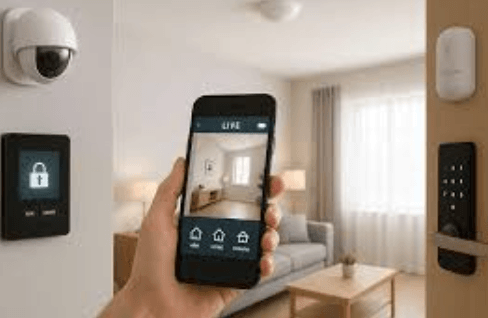
Smart security systems align with contemporary homes by integrating seamless connectivity, scalable components, and user-centric controls. In this assessment, the approach is analytical and restrained. Systems harmonize with architectural design, energy patterns, and occupant routines, enabling intuitive monitoring and rapid response. The emphasis centers on smart security and home integration as functional foundations, rather than ornament, for flexible, autonomous protection.
How to Pick the Right Platform and Devices
Choosing the right platform and devices requires a structured evaluation of interoperability, scalability, and security. The analysis should compare ecosystems for open standards, API access, and module extensibility, ensuring future flexibility. Consider privacy controls and data ownership, clarifying how data is stored, shared, and governed. A transparent vendor approach reduces risk, supporting autonomous, adaptable, and secure home configurations.
How to Install and Integrate for Seamless Automation
Installing and integrating smart security systems for seamless automation requires a disciplined, stepwise approach.
The process begins with defining security basics, then mapping device compatibility and network topology.
Systematic installation follows, focusing on secure pairing and robust automation rules.
Anticipate integration challenges such as firmware drift and hub latency, addressing them through standardized protocols, regular updates, and clear failover procedures for uninterrupted operation.
How to Evaluate Security Quality, Privacy, and Costs
Evaluating security quality, privacy, and costs requires a structured, criteria-driven approach that weighs protection guarantees, data handling practices, and total ownership expense.
Assess security reliability through proven uptime, response capabilities, and system resilience.
Examine data governance: access controls, retention, and transparency.
Compare long-term ownership costs, maintenance, and potential upgrade needs to ensure balanced, freedom-respecting, evidence-based decisions.
See also: quikconsole
Frequently Asked Questions
How Reliable Is Smart Home Security During Power Outages?
During a power outage, reliability varies; thus, power outage resilience depends on architecture and battery backup efficiency. Systems with independent power sources maintain monitoring, while centralized hubs may falter. Overall assessment reflects careful, analytic, concise evaluation.
Can I Use Existing Cameras With New Systems?
Yes, existing cameras can often integrate with new systems through compatibility checks. Integration compatibility varies by brand; cloud storage pricing and data plans should be reviewed before committing to a platform. This approach supports informed, independent security decisions.
Do Smart Security Systems Require a Dedicated Modem?
A smart security system does not inherently require a dedicated modem; instead, it relies on internet access. It can use cellular backup, and options vary by system, ensuring connectivity remains when primary networks fail.
What Happens to Data if the Hub Fails?
If the hub fails, data may temporarily halt collection but typically remains encrypted and queued; upon recovery, data is transmitted. Data encryption protects in transit and at rest, while data retention policies govern how long recovered information is stored.
Are There Hidden Fees for Updates or Cloud Storage?
Answer: No universal hidden fees exist; policies vary by provider. An interesting statistic shows 62% of homeowners encounter surprise charges. The question concerns hidden fees and cloud storage, analyzed analytically: some plans include or exclude cloud storage, others upfront.
Conclusion
Smart security systems increasingly redefine homes as harmonious, autonomous ecosystems where protection feels invisible yet omnipresent. An analytic lens reveals that modular devices, open ecosystems, and privacy safeguards convert security from clunky gadgetry into a seamless architectural layer. Methodically, integration across platforms reduces friction, while scalable components future-proof households against evolving threats. Concise evidence suggests costs are offset by ongoing resilience and convenience. In essence, security becomes a foundational, unobtrusive habit—every room safer, every routine smoother, every glance reassuringly warranted.